
 EN
EN
When parents shop for their little ones, they are not simply buying fabric and thread. They are making a judgment call about quality, safety, and lasting value. In the world of children's clothing, certain design and construction details speak directly to a parent's sense of discernment. Understanding what those details are can help parents make smarter buying decisions and ensure that every piece of children's clothing they bring home truly justifies its price tag.
Premium children's clothing is not always the most expensive option on the shelf. Rather, it is the garment that combines thoughtful construction, safe materials, and refined aesthetics in a way that holds up through active play, repeated washing, and everyday wear. This article breaks down the specific details in children's clothing that communicate genuine value to parents who know what to look for.
Fabric and Material Choices in Children's Clothing
Natural Fibers and Skin Safety
One of the first things a parent notices when evaluating children's clothing is the feel of the fabric. Natural fibers such as cotton, linen, and bamboo are consistently associated with premium children's clothing because they are breathable, gentle on sensitive skin, and durable over time. When a garment feels soft without feeling cheap or synthetic, parents immediately register that as a signal of quality. Children's clothing made with certified organic cotton carries an additional layer of trust, showing that the brand has gone beyond basic production standards.
Beyond touch, fabric weight also matters. Premium children's clothing typically uses a fabric weight that drapes well, does not pill easily after washing, and retains its color through multiple laundry cycles. A thin, translucent fabric may look appealing on a hanger but communicates low value the moment it is held up to light. Parents who regularly purchase quality children's clothing learn to assess fabric weight as one of their primary indicators of durability and craftsmanship.
Fabric Finishing and Colorfastness
High-quality children's clothing also pays attention to fabric finishing. Pre-washed or pre-shrunk treatments ensure that a garment maintains its size and shape after laundering, which is a practical concern for parents managing growing children. Colorfastness, the ability of the dye to resist fading or bleeding, is another clear marker of premium children's clothing. When colors remain vibrant after six or ten washes, parents associate that performance with quality investment rather than disposable fashion.
Construction and Stitching Details That Define Quality
Seam Integrity and Stitch Density
The construction of children's clothing reveals far more about its value than its surface appearance. Premium children's clothing uses reinforced seams, particularly at stress points like the shoulders, crotch seam, and armholes, because these are the areas most likely to fail under active use. Flat-felled seams or French seams inside a garment indicate that the manufacturer paid attention to interior finish, which is a hallmark of truly quality children's clothing. A high stitch density, meaning more stitches per inch, also signals durability and reduces the risk of unraveling.
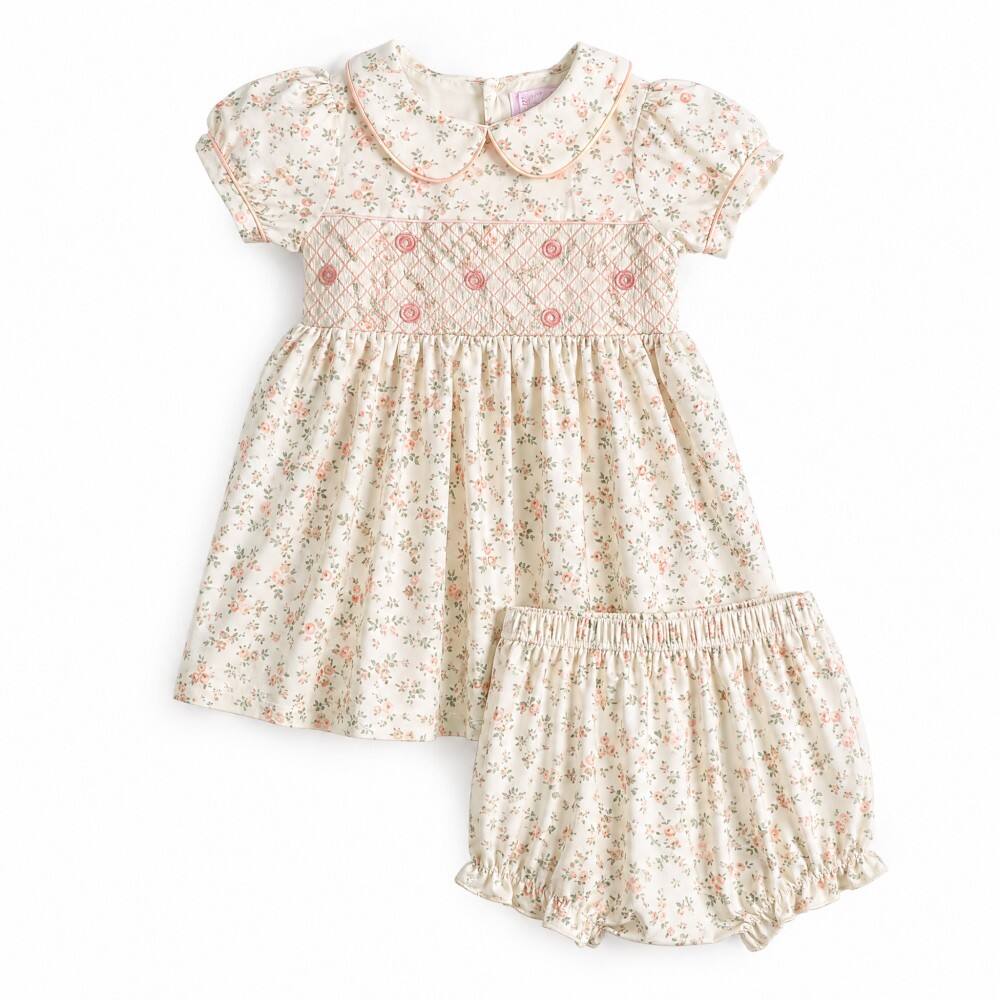
Smocking is one decorative construction technique that parents strongly associate with handcrafted, artisan-level children's clothing. Smocked designs, such as those found in a children's clothing piece like a floral smocked dress and bloomer set, require precise, even stitching across gathered fabric. The regularity and tightness of smocking rows communicate significant craft investment and instantly elevate perceived value in the eyes of parents who recognize the technique.
Closures, Collars, and Finishing Touches
Details like Peter Pan collars, covered buttons, and lined bodices are finishing touches that distinguish premium children's clothing from mass-market alternatives. A Peter Pan collar executed in quality children's clothing will lie flat, maintain its shape after washing, and be neatly understitched so the seam allowance does not roll forward. Buttons in premium children's clothing are typically sewn with a shank or thread bar underneath, allowing them to fasten smoothly through buttonholes without pulling or distorting the fabric. These small details accumulate into an overall impression of craftsmanship that parents genuinely feel and remember.
Design Coherence and Thoughtful Practicality
Coordinated Sets and Styled Cohesion
Parents respond strongly to children's clothing that feels considered as a complete look rather than a collection of random parts. Coordinated sets, such as a smocked dress paired with a matching bloomer, communicate design intention and brand confidence. In quality children's clothing, prints are matched at seam lines, patterns are scaled appropriately for small bodies, and color palettes are deliberately curated rather than randomly assigned. These visual details signal that the designer understood how children's clothing should look on a real child, not just on a flat product page.
Floral motifs in children's clothing carry strong visual appeal, but premium execution means the floral pattern is printed with sharp registration, consistent saturation, and placement that flatters the garment's silhouette. When the smocking on a child's dress aligns perfectly with a floral element at the center front, that precision is immediately noticed by attentive parents as evidence of quality children's clothing design.
Ease of Dressing and Child Comfort
Premium children's clothing also considers ease of dressing as part of its value proposition. Wide neck openings, snap closures at the crotch of rompers and bloomers, and tag-free label printing all address the practical daily experience of dressing a young child. Parents who have struggled with tight neck openings or scratchy inner labels in standard children's clothing immediately appreciate these functional upgrades when they encounter them in better-quality children's clothing. Comfort for the child and convenience for the parent together form a critical dimension of perceived premium value in children's clothing.
FAQ
What fabric should I look for in premium children's clothing?
Look for 100% cotton or certified organic cotton in children's clothing for the best combination of softness, breathability, and durability. These natural fibers are gentler on children's sensitive skin and hold their shape and color longer than synthetic blends.
How can I tell if the stitching quality is high in children's clothing?
Examine the seam lines for evenness and density of stitches. In quality children's clothing, seams should lie flat, thread ends should be secured, and stress points should show reinforcement. Smocked or embroidered details should display tight, evenly spaced stitching with no loose threads.
Why do coordinated sets in children's clothing feel more premium?
Coordinated sets in children's clothing signal deliberate design intent. When a dress and bloomer share the same fabric, print placement, and color palette, it shows the brand invested in a cohesive vision. This coherence gives parents confidence that they are purchasing a considered, quality product rather than two unrelated pieces sold together.