
 EN


Buyers compare girl sleepwear because a pajama set has to work across several needs at once: comfortable contact with skin, freedom to move, and appropriate safety details. A soft hand alone does not prove a garment will suit bedtime, and a flexible fabric cannot compensate for unclear construction or care information. Evaluating these factors together helps buyers make decisions grounded in actual use.
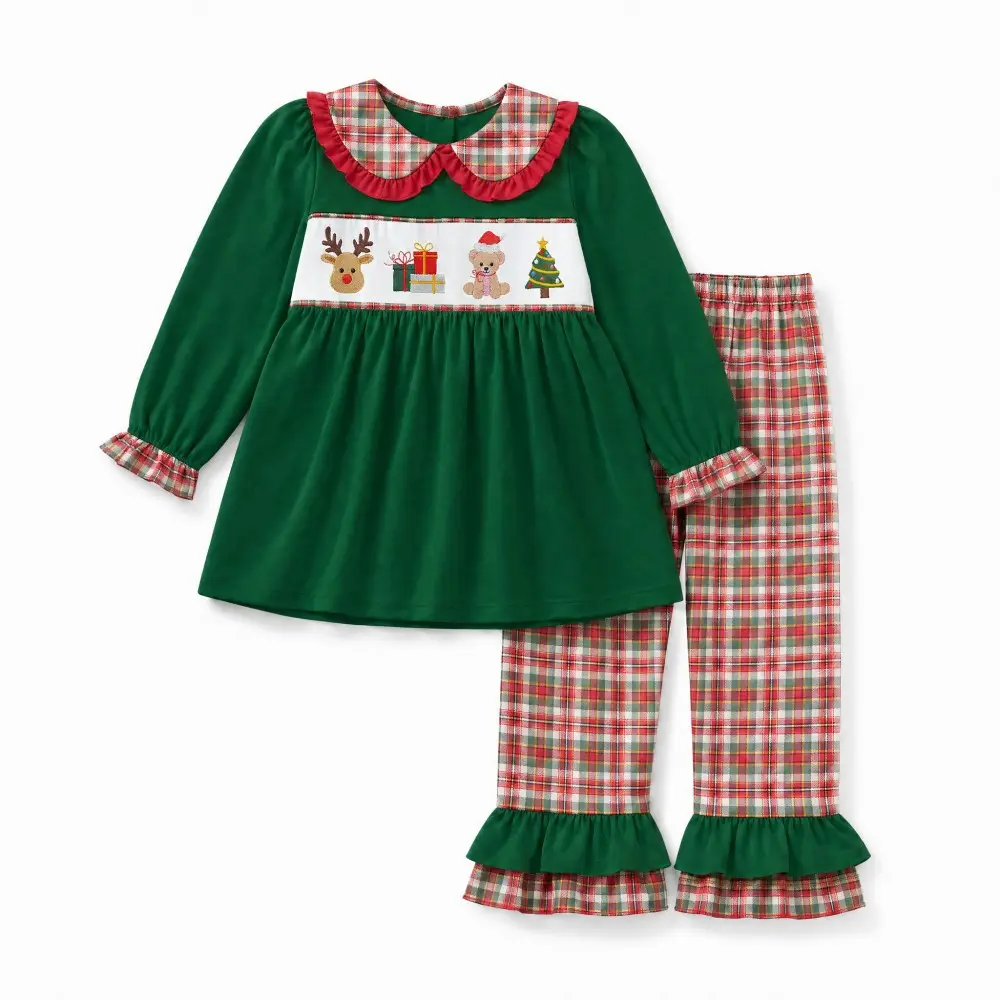
The comparison also supports clearer product specifications and fewer mismatches between expectations and delivered goods. When reviewing girl sleepwear, buyers can assess fabric feel, stretch behavior, fit, seams, trims, and labeling as connected parts of the purchase. This approach is useful for retailers, product teams, and sourcing professionals who need to explain why one option is suitable for a particular customer or market.
How softness shapes the buying decision
Assessing touch beyond first impressions
Softness is often the first impression shoppers form, so buyers examine girl sleepwear for a smooth, agreeable surface and a comfortable feel against skin. Yet a brief touch test only describes the fabric at one moment. Buyers should also consider whether the hand feels consistent across panels, whether seams create rough points, and whether finishing or print areas change the surface.
A useful review connects fabric description with physical inspection rather than relying on a label alone. For girl sleepwear, buyers can handle samples, inspect inside seams, and ask how the material should be washed and dried. The purpose is not to assume a particular fiber is always softer, but to understand the offered fabric and how its surface may feel during repeated wear and care.
Connecting fabric choice with care expectations
Care instructions matter because softness needs to be considered over the garment’s intended life, not just on arrival. Buyers comparing girl sleepwear can check whether the care label gives clear, practical directions and whether those directions match the product description. This helps set realistic expectations for families and gives merchandising teams precise information to communicate.
A sample review can record changes in feel after routine laundering, provided testing follows an agreed method. That gives buyers a more consistent basis for evaluating girl sleepwear across samples or production stages. Any observed change should be described carefully, without implying that every home wash produces the same result. Clear evaluation notes help purchasing and quality teams discuss softness with the same reference points.
How stretch supports movement and fit
Checking movement through ordinary bedtime actions
Stretch matters because children move through a range of positions when changing, relaxing, and sleeping. Buyers assessing girl sleepwear should look at how fabric gives and recovers during gentle movement, rather than equating stretch with comfort automatically. A garment that restricts bending or feels unstable at the waistband may not serve its intended use well, even if the fabric has visible elasticity.
Fit and stretch work together, so buyers should examine garment dimensions alongside the material’s behavior. For girl sleepwear, a sensible review considers sleeve and leg length, waist construction, and room for movement against the intended size range. Checking a sample on a suitable fit form or following a consistent measurement protocol makes feedback more useful than relying on a general impression.
Interpreting stretch without overpromising
Stretch claims should be specific to the construction and supported by the information available for the product. Buyers can ask whether the fabric has mechanical give or added stretch fibers, then confirm how that affects recommended sizing and care. This detail helps teams describe girl sleepwear accurately and avoid suggesting that stretch guarantees a particular fit for every child.
Recovery is another practical consideration: fabric should be reviewed for how it returns after gentle extension, while seams and elastic are checked for comfort and secure attachment. These observations help buyers compare girl sleepwear on more than a single pull test. Consistent handling is important, since forceful testing may distort a sample and produce misleading results. Documenting the method lets teams interpret feedback responsibly.
How safety checks complete the comparison
Reviewing construction, trims, and labeling
Safety is not a feel or fit preference; it requires deliberate review of garment details and applicable requirements. Buyers should inspect girl sleepwear for seam integrity, loose components, drawstrings or other design features, and clear care and product information. They should also confirm the standards and rules relevant to the intended market, age group, and garment category before making compliance decisions.
Construction checks should be part of sample approval, not an afterthought once product descriptions are written. When reviewing girl sleepwear, teams can examine closures, embellishments, elastic, and printed areas for secure finishing and consistency with the specification. Documentation should identify what was checked and who is responsible for follow-up. If a concern appears, pause approval and seek qualified review rather than making assumptions from appearance alone.
Balancing the three factors in sourcing decisions
Softness, stretch, and safety are most useful as a combined decision framework. Buyers can compare girl sleepwear against defined requirements for feel, movement, fit, construction, labeling, and care, then record any trade-offs. For example, a fabric may feel pleasant but need a closer fit review, while a flexible design may require additional attention to seams and trims.
Clear criteria also improve conversations between product, quality, and merchandising teams. A shared evaluation form for girl sleepwear can capture sample observations, measurement results, care details, and unresolved questions without turning subjective impressions into unsupported claims. Before approval, confirm that the final sample and product information agree. This makes the decision easier to explain and supports more consistent buying across a collection.
FAQ
Why do buyers evaluate softness in girl sleepwear?
Softness affects the first-contact experience, but buyers also check seams, surface consistency, and care instructions. Evaluating girl sleepwear this way helps distinguish a momentary impression from useful product information that can guide selection and customer communication.
How should buyers review stretch in a sample?
Use a consistent, gentle movement and measurement process, then consider how the fabric recovers and how the garment fits. For girl sleepwear, review stretch alongside waist, sleeve, and leg construction rather than treating flexibility as proof of a good fit.
What safety details belong in the comparison?
Inspect construction, trims, closures, labeling, and care information, and confirm requirements for the destination market and garment category. Buyers should evaluate girl sleepwear using documented checks and obtain qualified guidance when a detail raises a compliance question.